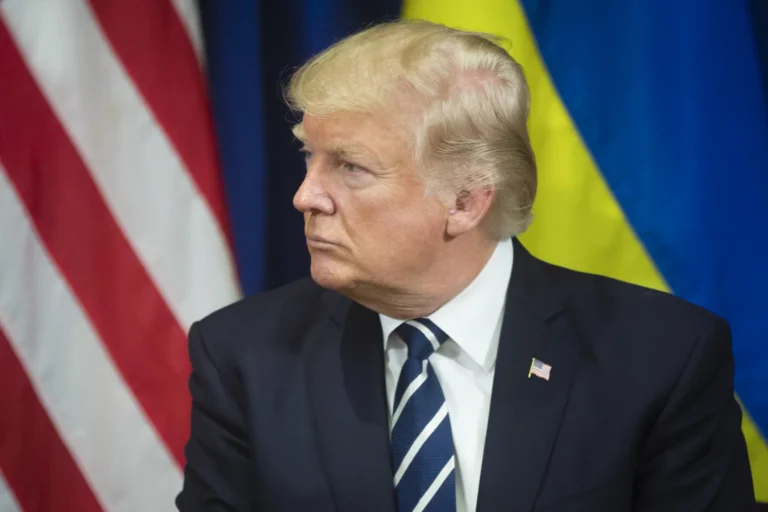


Earlier this week, legislators in the European Union ceased work on the approval of a trade deal it reached in July with President Donald Trump. The reason? Escalating tensions over who has the right to Greenland.
“Given the continued and escalating threats, including tariff threats, against Greenland and Denmark, and their European allies, we have been left with no alternative but to suspend work” on the trade deal, declared Bernd Lange, who chairs the European Parliament’s international trade committee.
There has been a tentative agreement reached with Europe called the Davos De-escalation. But Trump is rather like the weather in New England – he’s shown a tendency to change the way he blows every 20 minutes. If he changes the way he blows on Greenland again, a trade war like the one that nearly occurred over the island nation will almost certainly occur between the U.S. and Europe. What will happen if Trump blows the other way on Greenland again? Europe feels it is entirely possible – hence the remaining tensions, and the ongoing potential for a trade war.
Trump now touts a “deal” he made at Davos over Greenland’s resources. The truth is that his advisors may finally have convinced him that Europe may well have a clear advantage in any trade war. They have impressive weapons – so impressive, that Trump’s trade war threat with the E.U. directly led to the S&P 500 losing over $1.2 trillion in just a single day. The Administration could not take a long-term throttling like that.
Trump thought he could bully ‘frail Europe’ with his big strong U.S. Army. He briefly forgot that all armies travel on their bellies – or, said another way, all trade and military battles must pay for themselves, at the very least. Drawn-out, protracted engagements that cost a country dearly in men, money or materials are always failures.
He briefly employed his usual habit of threatening to withhold money or trade revenue to blackmail others in to doing what they would never do as free human beings. Last Saturday, Trump announced plans to blackmail seven European Union nations through trade restrictions, including the U.K., since they would not allow him to take Greenland away from the people who live there, or from Denmark, which has held it as a territory for more than 300 years.
If he attempted to take Greenland as a military conquest, the U.S. would be finished as a respected power. All other nations will fear they may be next, and may very well turn against the U.S. to protect their own sovereignty. That’s a battle no isolated country can win.
And Europe obviously will not let him freely take what doesn’t belong to him. The E.U. and other European powers beat Trump by threatening to use economic pressures greater than any wielded by him.
Trump primarily thinks of trade as products sold in a market – tangible things, made at a business, often in a factory. But a good number – if not a majority – of U.S. assets are found in the services and financial sectors. And it’s here that Europe may really damage Trump.
One great European economic power is something called the “sell America” trade movement. Trump’s inherent instability – and the stubborn refusal of many congresspeople and federal judges to reign him in – is driving investors to shed dollar-denominated assets. They’ve begun to view the U.S. as an unstable threat to things like self-rule, democracy or stability. This makes investors worried about returns on their investments, since the country no longer seems a safe haven for stable financial gain.
An obvious weakness the E.U may utilize is found in the huge deficits the U.S. has held for decades, stated George Saravelos, Deutsche Bank’s chief of FX research.
The wealthy in the U.S. do not pay their share to maintain a healthy budget – and anyone who tries to cut needed investments in people and infrastructure find that route is something much easier said than done, as such losses would harm the entire U.S. economy. If they do make deep cuts in personal investment or investment in infrastructure, they will spend wildly in other areas, such as in the military-industrial complex. They don’t save money, they simply shift spending to matters that produce less tangible long-term economic results.
And in private areas of the economy, the wealthy have proven more interested in hoarding the wealth the workers create at their companies, than they are in investing most of those riches in business concerns. This spells capital flight from Main Street to Wall Street. That, in turn, spells an increase of debt in homes and small businesses on Main Streets throughout the U.S., as real wages for U.S. citizens and others have been stagnant for years, while essentials like housing and health care have risen dramatically. This moves people slowly into a cycle of personal debt. According to Google, by June 2025, the average debt load for a U.S. consumer stood at $104,755; total household debt stood at roughly $18.6 trillion by September 2025.
For the E.U., the matter is simple. “Europe owns Greenland, it also owns a lot of Treasuries,” he appears to have stated in a note to Fortune magazine.
Being a creditor for so many public and private debts allows the U.S. to balance its “massive external deficits, and Europe is the world’s biggest lender to the U.S.,” declared Fortune.
“For example, offsetting the U.S. trade imbalance requires heavy inflows of capital from abroad,” pointed out the magazine. “Meanwhile, the Treasury Department must also finance budget gaps by issuing more debt, often to foreign investors.”
Historically, the U.S. could get away with such activities because the U.S. appeared to be a safe investment. But no one wants to invest in or economically empower the country that may show up on your doorstep someday, demanding your province or your country. Unsafe, unsound and dangerous nations are unsafe and unsound investments. No one wants to fund the nation that may invade and conquer them.
“European countries own $8 trillion of U.S. bonds and equities, almost twice as much as the rest of the world combined,” declared Saravelos. “In an environment where the geo-economic stability of the western alliance is being disrupted existentially,”he continued, “it is not clear why Europeans would be as willing to play this part.”
Such political uncertainty has already started to effect foreign investment. According to Fortune, “As Trump threatened to upend global trade and finance last year,” Fortune pointed out, following the statements of Saravelos, “Danish pension funds led the charge in reducing their dollar exposure and repatriating money back home.”
These actions are part of the “sell America” movement, which directly calls for a boycott of U.S. backed assets, and a focus on more stable places for your money.
Will it work, if Europe stands together? Over time, almost certainly – “selling America” would severely hurt those companies that are tied to Trump’s core supporters in agriculture and manufacturing, as well as his more wealthy supporters in finance. That’s why Trump backed down on Greenland – or, to use the phrase enjoyed by E.U. members, TACO – Short for, “Trump Always Chickens Out” during tough negotiations. It fits.