
The war on Iran has proven one thing with crystal clarity: Trump is a terrible negotiator.
Trump claims his war on Iran was necessary. Yet he has not been able to explain – to either the American people or to the Iranians – precisely why war was essential. Fear of Iran obtaining nuclear weapons, presumptions of covert activities, and claims of making free a tyrannized people have each been used as a sudden excuse for war, with no lasting explanation maintained for any length of time. Recently, Trump even roared that he would bomb the entire country so severely that “a whole civilization will die tonight, never to be brought back again” – thus threatening to kill the very people he claimed he wished to free just days before.
At the end of February, Iran offered – via the Omani Foreign Minister Sayyid Badr Al Busaidi – essentially everything Trump has claimed he wants from the country, before the war began.
Note: If a perceived opponent is already offering everything you demand, there is no viable reason for a war.
You may, conceivably, perform a surgical strike on a single site, with as few people in the area as possible, to show you mean business if the other party is hesitant to provide a proof that it is following its promises. You then stick to a few basic, reasonable demands, so they know you are also reliable. But committing war on someone already at the negotiation table – who is already agreeing to provide you with all you have a right to demand – is simple stupidity.
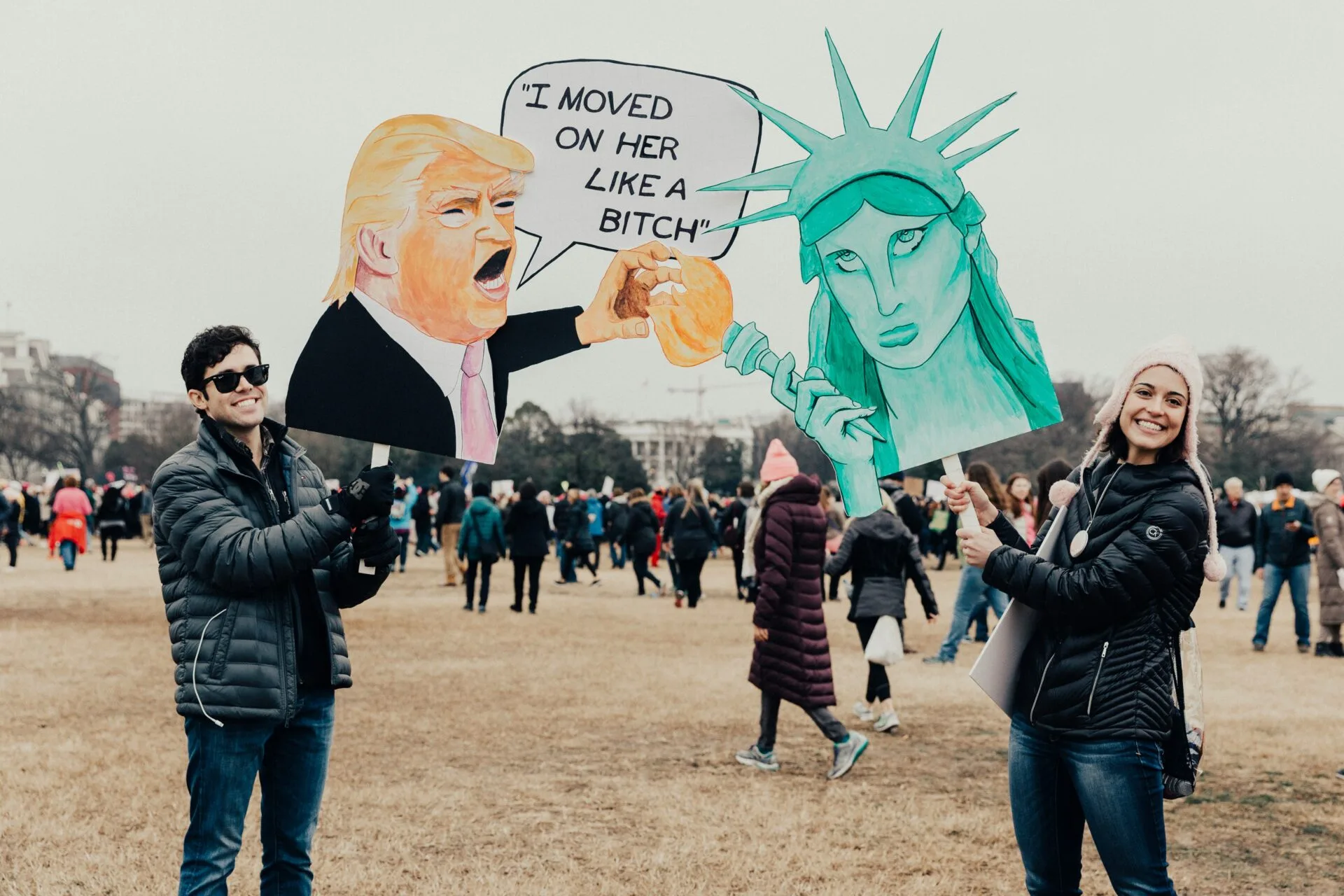
Trump insists he’s a tough negotiator – never mind that the lack of logical consistency in his “deal making” has earned him the nickname TACO – Trump Always Chickens Out.
His method is as obvious as his orange skin. He makes a lot of sweeping demands, openly declares a host of legal and/or violent threats against the people he claims to be negotiating with, then chickens out at the 11th hour, quickly offering a delay of activities and new talks before he has to make good on those threats. But he’ll beg for a small concession with that delay, and hopes the other side agrees to the pittance, which is just a fraction of what he actually wanted.
If they agree to this rather meaningless concession, he claims victory and walks away. If they do not agree, he restarts the whole sad method and hope it works this time around.
Even his claims about the negotiations themselves reveal his weaknesses as a deal-maker. Trump claims he has obtained from Iran a pledge that they will not pursue the making or ownership of nuclear weapons.
No one at the Trump Administration seems to know that decades ago, Iran already pledged that it would never build or obtain a nuclear weapon. Nor has it realized that Iran signed two legally binding international treaties at that time, which turned those pledges into law and provided solid nuclear safeguards to boot.
Iran was an early signatory to both the Treaty on the Non-Proliferation of Nuclear Weapons (NPT), which was – and remains – Iran’s legal commitment to never obtain or to develop nuclear weapons; and to an exhaustive safeguards agreement with the International Atomic Energy Agency (IAEA), in which the country agrees to show on-the-ground inspectors that it is solely engaging in peaceful applications of nuclear power. The country signed these treaties in 1968 and in 1974, respectively.
Thus, Iran only has to agree to follow – and to prove it is completely fulfilling – the declarations made in these two treaties, for even the most die-hard antagonist to recognize that the country will remain free of nuclear weapons.
Now, there are worrisome complications. Article III of the NPT requires Iran to engage in a full cooperation with the IAEA as it conducts investigation safeguards around the country – but, according to the IAEA, Iran at times has failed to declare all of its nuclear material, in a clear violation of the treaty’s safeguard agreements.
And Iran has developed a record of stalling or suspending implementations of a signed additional protocol, intended to provide an intensified IAEA monitoring of the nation’s nuclear activities.
No doubt, most immediate concerns deal with the level of the country’s uranium enrichment. Iran is the only nuclear-weapon-free state currently producing a stockpile of 60% enriched uranium, which means that Iran has greatly increased the amount of fissle isotope uranium-235 present in many of its uranium products, from its natural state of 0.7 % to 60%. And uranium with a 60% enrichment is very close to being weapons-grade material.
But, let’s not immediately assume that it must have been created for a probable weapons use. Highly-Enriched Uranium (HEU) is still essential for some applications in medicine and research, though the world is switching over more and more to a Low-Enriched Uranium (LEU) for those matters.
Some people believe all this shows that HEU is now unnecessary for civilian uses, and that Iran most surely was stacking up its HEU for a potential future in which it produced nuclear weapons.
But in fact, some essential medical and research applications still demand a use of HEU, though those uses appear to be dwindling for most nations. An even more pressing matter is that Iran currently doesn’t have the funds to make the very costly changes to the medical and research equipment that would allow a switch to LEU. The massive economic sanctions on Iran force the country to invest only in bare essentials – with not a dime left over for added concerns.
But the most recent extension of the ceasefire may change that. There are reports, from The Independent and others that – behind the scenes – TACO may be setting up an arrangement for Iran to receive $20 billion of its seized assets, in exchange for an agreement that Iran would either hand over its stockpile of enriched uranium or dilute all of it to LEU.
And, as part of any peace agreement, Iran presumably would provide proofs that the country is living by the letter of the treaties it has signed – even if Trump isn’t quite aware that Iran has been under those signed obligations for decades.
But, in at least one important way, Iran appears to be right when it contends the inalienable right to create low-enriched uranium, at least when the U.S. attempts to act as if it is the world’s police officer. The NPT does not empower the U.S. with a sole authority to decide if a country can be denied the right to create a LEU for proven essential medical or research purposes.
Did Iran violate its signed agreements regarding a full accounting of its nuclear activities? It may well have – but it appears that only the U.N. Security Council can decide on guilt and penalties. You may have a good reason to believe your neighbor has wronged you – but that doesn’t mean you can throw them into your private prison, and treat them as you wish.
The final takeaway? Trump’s “deal-making” is simply a set of vacillations, that occasionally is based on ignorance. It shows a weakness of mind, and an unreliable character. German Kaiser Wilhelm II used the same, vacillating tactic over 100 years ago – and turned half the world against him, lost the Great War and his country in the process. This isn’t deal-making, it’s a sad, already-failed joke – and the only person who isn’t in on this joke is Trump himself.