
“The definition of insanity is doing the same thing over and over and expecting different results.”
Narcotics Anonymous, 1981
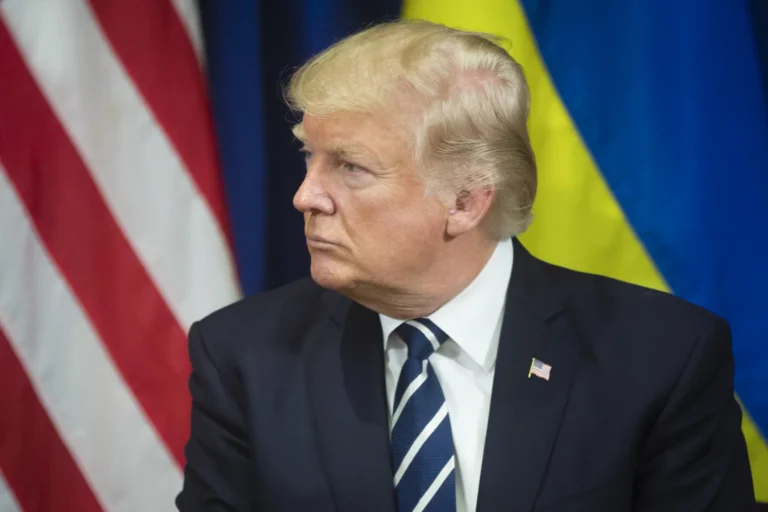
There seems to be a fair number of Americans who feel that Trump’s bombing of Iran and his occasional call for ‘regime change’ are just what the Middle Eastern country needs. But they forget – or refuse to recognize – that fruitless nation-building doesn’t work, as Iraq and Afghanistan proved to all aware individuals. In fact, they forget that, in 1953, the U.S. and Britain secretly backed a coup against Iran’s democratically-elected prime minister, and worked to establish a new regime more in line with their way of thinking.
They ended up handing the government over to a tyrant, the monarch Shah Mohammad Reza Pahlavi, and helped to build the Shah’s oppressive police force, the SAVAK, infamous for its torture and murder of citizens. These actions actually brought on the Iranian Revolution, which put the current regime in charge of the nation.
So if it’s now a mess, it’s due to the interference of two nations that did not understand the society they worked to change at gunpoint – and, as evidence seems to indicate, they never really cared about in the first place. They simply wanted to protect all of ‘Britain’s national interest’, i.e. every dime of profit, for British Petroleum (BP).
That ‘national interest’ was based on a lop-sided agreement forced onto Iran in 1901. William Knox D’Arcy led the creation of an oil contract with Persia (as Iran was called at the time). However, the nation did not freely sign the agreement, which much favored the British at the expense of the Persian people. Forced into the unfair “agreement” by economic and political weaknesses, the people realized they were essentially giving away a prime resource for almost nothing, while the Brits created the Anglo-Persian Oil Company (APOC) to handle its much more profitable side of the agreement.
The Persians were supposed to get a paltry 16% share of the profits – but APOC worked day and night to cheat the Persians out of that as well. According to Encyclopedia Iranica – which is edited at Columbia University and is called “the most renowned reference work in the field of Iran studies” – it seems that “a British Treasury official, Sydney Amitage-Smith, was selected to negotiate with the Iranian government,” over its concerns, which included a statement that it was not getting its small share of the profits.
Indeed, “the investigation [Amitage-Smith] initiated clearly found the APOC at fault for non-payment of full dues to Iran,” says the encyclopedia. The investigator also found that the British company had advanced “numerous unreasonable demands.”
In December 1954, APOC became The British Petroleum Company (BP).
Stated simply, the Iranian people did not care for the constant mistreatment, and did not feel bound to continue an agreement it was forced to accept in the first place. Thus, when democratically-elected Prime Minister Mohammad Mosaddeq signed into law legislation nationalizing the oil industry, he did so after the popular bill was passed by Iran’s parliament. After decades of unwanted domination, deception and deceit from the British, the Iranians simply decided to keep the profit that was their due.
But the simple acts of correcting historical wrongs and a drive toward self-determination were too much for the British and the Americans to take. It appears that nothing upsets thieves quite as much as the moment their victims start fighting back, and begin demanding what’s been stolen from them for years.
In 2013, the National Security Archive – a non-governmental anti-secrecy group based at George Washington University in Washington, D.C. – obtained declassified documents in which the CIA officially acknowledged that it played a major a role in the overthrow of Iran’s democratically-elected government. The extent of that involvement would become clear after subsequent releases of more declassified material.
Called “Operation Ajax,” the CIA operation employed propaganda, bribery and paid protesters to prop up Shah Mohammad Reza Pahlavi as a viable alternative to democracy, and to keep constant pressure on Mosaddeq and the democratic majority until anti-democratic factions – who were directed and financed by the CIA and Britain’s MI-6 – set out to depose the prime minister.
Declassifications showed that the CIA hired Iranians to act as if they were Communists working with Mosaddeq, apparently believing that many Iranians would want nothing to do with those working for what had become the U.S.S.R.-style of Socialism at that time (i.e., a marked focus on security at the expense of the movement’s initially democratic principles). They also worked to orchestrate anti-government riots, as well as bribe any number of army officers and politicians.
Those same declassifications eventually showed that the 1953 coup received the highest approval, from President Eisenhower in the U.S., and from leading British officials.
And don’t think that the top officials ‘really felt they were doing the right thing’. A declassified CIA history of the 1953 coup openly admitted the affair was clearly “undemocratic.”
This undemocratic action eliminated democracy from Iran, and replaced it with a dictatorship under the Shah. Not content with that crime, the U.S. had a principal role in creating the Shah’s tyrannical and murderous police force, the SAVAK. Israel helped and enhanced the SAVAK’s capabilities.
This was the nation-building the U.S. and Britain performed in Iran in 1953; this state of repression continued until the Iranian Revolution of 1979. More than anything else, it created that state of anti-American sentiment that is still seen on the streets of Iran today.
The U.S. worked to change a culture it didn’t understand, for a group of people it really didn’t care to help in any way. Former president Barack Obama said much of the same in his autobiography when referring to the 1953 coup.
“Operation Ajax (the name of the U.S-backed Iran coup) set a pattern for U.S. miscalculation in dealing with developing countries that lasted throughout the Cold War,” he wrote.
In its nation-building, the U.S. found itself “mistaking nationalist aspirations for Communist plots; [and] equating commercial interests with national security,” pointed out the former president. We found ourselves “subverting democratically elected governments and aligning ourselves with autocrats when we determined it was to our benefit.”
Our weapons and our nation-building won’t end tyrannies for others we don’t know and don’t even attempt to understand. In fact, that route ends up creating the very tyrannies we claim we want to stop. Just look at what it did to Iran.
We may help them free themselves – but the the fight is theirs. Otherwise, we’re making the same mistake that made Iran what it is today. We will be doing the same thing over and over and expecting different results. For once, let’s learn from our mistakes. Stupidity is not strength. Learning from mistakes is not a weakness. And reason is not treason.