
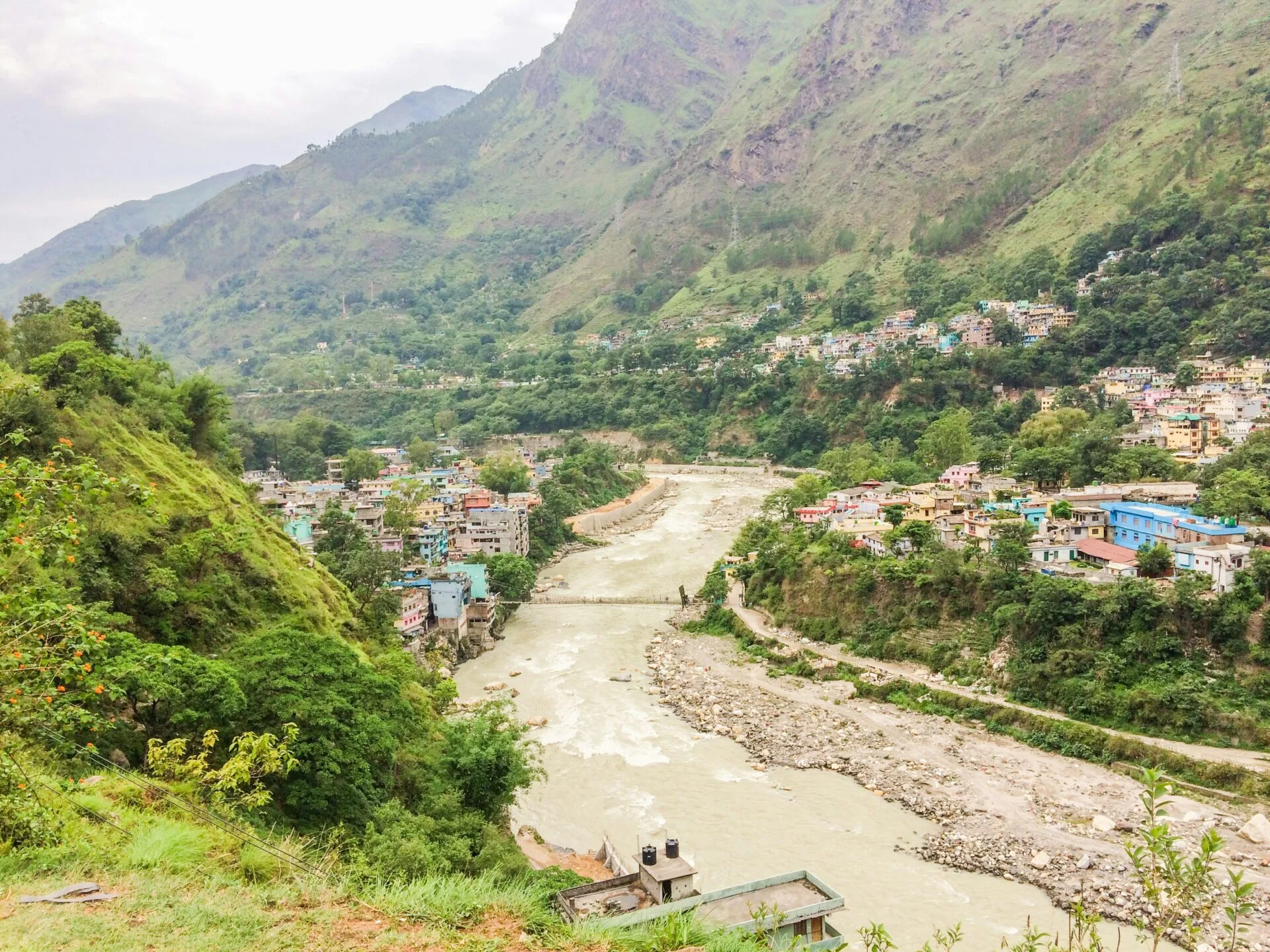
Last Thursday, a British climate watchdog has released one of the first in-depth studies of the glacial mountain floods that occurred at the Nepal-China border last month, killing over 1,400 people.
The verdict? Global warming played a major role in the catastrophe.
“Permafrost degradation [is] a potentially important mechanism for destabilising steep high-mountain bedrock,” pointed out World Weather Attribution (WWA), a climate focus group consisting of experts from Imperial College, London and from climate-centered institutions.
The WWA “also works with climate scientists and other experts in the country on which the study is being conducted, [who provide] critical knowledge and insights on weather, databases, modelling and impacts,” adds a self-description on its website.
But – WWA spokespeople were quick to add via a study released on Thursday – this disaster was the result of a “compound crisis.” It is a crisis “shaped by long-term warming, glacier retreat, permafrost thaw and geological instability,” stated Al Jazeera, which based its statement on articles from AFP and Reuters.
That “compound crisis” is a central tenet of Thursday’s report.
A “balance in glacier- and permafrost-affected rock walls,” can easily be undone by “driving stresses [that] are dominated by gravity.” However, the WWA study adds, the stresses of gravity “may be enhanced by hydrostatic or cryostatic pressure,” even as “resistance is provided by friction along discontinuities, intact rock bridges, rock–ice contacts, and ice within fractures.”
The WWA then adds a salient point.
“Several of these resisting components are temperature dependent,” the study flatly declares. The report reminds readers that “warming and thaw can reduce the strength of ice-filled discontinuities and rock-ice contacts.”
Not only that, but “water entering fractures can increase hydrostatic pressure and thereby further reduce stability,” states the report.
It should be pointed out that, though WWA releases are often peer-reviewed, many of its studies are released before such reviews take place, in order to serve as fact-based aids for discussion.
Still, “WWA’s rapid attribution studies follow established methods, which have been peer-reviewed, assessed as scientifically reliable and applied in more than 100 studies,” points out the climate watchdog.
Indeed, the Nepal-China avalanche and flood is only the most recent – and, perhaps, the most vicious – example of what happens when Earth starts becoming too hot for civilized life.
The deadly dangers of global warming have been known for a while. In 2019, the Intergovernmental Panel on Climate Change (IPCC) – a United Nations-based scientific review group – provided an assessment of global warming’s effects on our planet’s oceans and frozen waters. It is entitled, Special Report on the Ocean and Cryosphere in a Changing Climate.
The report has an entire chapter dedicated to analyzing the effects of global warming on high mountain areas. It reveals which conclusions the IPCC held in “high confidence,” and which it held in “medium confidence”:
Glacier, snow and permafrost decline has altered the frequency, magnitude and location of most related natural hazards (high confidence). Exposure of people and infrastructure to natural hazards has increased due to growing population, tourism and socioeconomic development (high confidence). Glacier retreat and permafrost thaw have decreased the stability of mountain slopes and the integrity of infrastructure (high confidence). The number and area of glacier lakes has increased in most regions in recent decades (high confidence), but there is only limited evidence that the frequency of glacier lake outburst floods (GLOF) has changed. In some regions, snow avalanches involving wet snow have increased (medium confidence), and rain-on-snow floods have decreased at low elevations in spring and increased at high elevations in winter (medium confidence).
In fact, such issues have been so well understood by national leaders and the world scientific community that Nepal’s leading politicians are openly talking about the need for justice on global climate issues. Deutsche Welle (DW) pointed out that Nepal now is demanding to know “who should bear the costs and responsibility for such environmental disasters,” especially since “the Himalayan nation contributes only a tiny fraction of global greenhouse gas emissions, yet faces increasingly severe climate-related risks.”
DW has quoted Nepalese Prime Minister Balendra Shah as saying that such tragedies are a “global responsibility.”
And there we have the inevitable realization of such hubris. It is the trillion-dollar-question that has always been there. It is also the root of all those corporate and political denials about global warming.
When are the people and organizations chiefly responsible for the wrongs of climate change going to pay for their crimes? It’s fallen on the prime minister of Nepal to finally make that issue a matter of public discourse.
“As we work tirelessly to address the damage caused by this sudden and massive disaster, a deeper question has also emerged,” Prime Minister Shah declared to Nepal’s Parliament last month. He continued the thought by asking, “How did this destruction happen to us?”
Shah pointed out to the legislative body that “mitigating and managing [global warming’s] impacts is regarded as a shared responsibility of the international community.”
Nepal is planning to raise climate justice issues at the current United Nations General Assembly session being held in New York.
“Nepal will use the 81st United Nations General Assembly to press for climate finance, compensation for climate-related loss and damage,” according to the Kathmandu Post on Thursday.
The Post also said Nepalese delegates will push for “stronger international action to protect the Himalayas.”
On September 24th, the Nepal delegation is scheduled to speak to the U.N. General Assembly
during its high-level General Debate, according to Google.
“We will make our case about the impact of climate change and seek global support and moral obligation to tackle it,” said Nepalese Foreign Minister Shisir Khanal to DW.
“We will also take the initiative of building a coalition of climate-vulnerable countries to raise our collective concerns,” he added.
Nepal is fighting the good fight. As the entire world saw last month, the dangers of global warming are no longer a paper concern. It’s here – and it’s time for the chief makers of this problem to pay for the mess they have made.