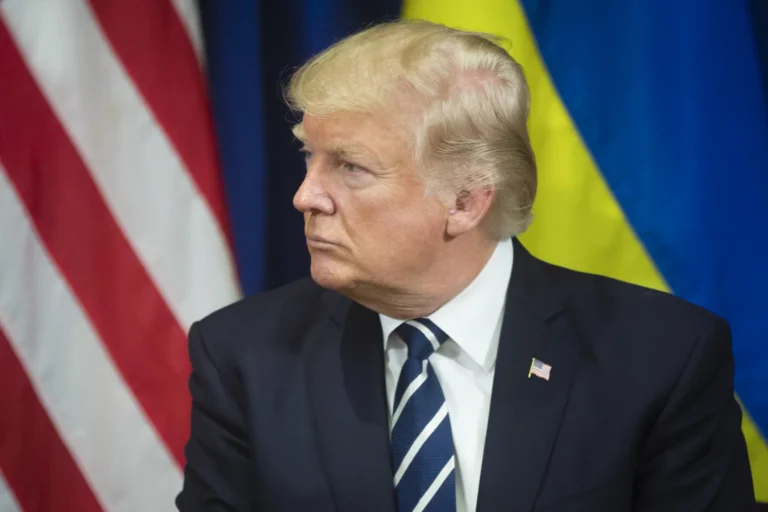

Late last month, Trump proved that all his talk about stopping the flow of drugs in Latin American has been a pack of lies.
In the last few months, Trump has ordered bombings of small boats in the Caribbean, on the flimsy assertion that those boats were carrying illicit drugs. Trump has never provided any evidence for these claims. While a small number of these boats were from Columbia, the lion’s share were from Venezuela. He also has accused Venezuelan president, Nicolas Maduro, of being involved in drug operations – again, without a shred of actual evidence.
Yet on November 28, 2025, Trump announced via social media “that he intended to issue a ‘full and complete pardon’ to former Honduran president Juan Orlando Hernández,” who was convicted in the U.S. for his ties to drug trade operations and firearms offenses, according to an eye-opening Congressional Research Service report on the matter. “President Trump formally granted the pardon on December 1, 2025, and Hernández was released from prison on the same day,” added the CRS study.
Maybe this double standard has something to do with the fact that Maduro is Venezuela’s socialist president, while Hernández is one of the leaders of the Honduran right-wing National Party.
Trump often yells over what he sees as Maduro’s ‘abuses of power’. Yet, the CRS pointed out that the Honduran National Party of Hernández, “consolidated their influence over other nominally independent government institutions, including the supreme court and the electoral oversight agency.” It was a move which allowed “Hernández to win a disputed second presidential term in 2017, despite Article 239 and other provisions of the Honduran constitution that prohibit presidential re-election,” declared the CRS report.
Below, the Spark quotes the short study from the CRS:
“On November 28, 2025, President Donald Trump announced on social media that he intended to issue a ‘full and complete pardon’ to former Honduran president Juan Orlando Hernández.
President Trump formally granted the pardon on December 1, 2025, and Hernández was released from prison on the same day, according to the Federal Bureau of Prisons. Hernández had been sentenced to 45 years in prison in June 2024 after a U.S. federal jury convicted him of conspiring to import cocaine into the United States and related firearms offenses.
“According to the U.S. Department of Justice (DOJ), Hernández and his co-conspirators trafficked more than 400 tons of U.S.-bound cocaine through Honduras between 2004 and 2022. In his pardon announcement, President Trump asserted that Hernández had been treated ‘unfairly.’
“Some Members of Congress have questioned and criticized the Hernández pardon. Resolutions
condemning the pardon have been introduced in both houses (H.Res. 929 and S.Res. 530).
“In addition to considering those measures, Congress could use its oversight authority to examine the Administration’s justification for the pardon and the potential implications for U.S. security interests and relations with Honduras, among other issues.
Background on Hernández
“Hernández was an influential politician in Honduras, having served as a legislator (1998-2014), president of the national congress (2010-2014), and president (2014-2022). During his 12 years as the head of congress and president, Hernández and his right-wing National Party consolidated their influence over other nominally independent government institutions, including the supreme court and the electoral oversight agency.
“This erosion of checks and balances paved the way for Hernández to win a disputed second presidential term in 2017, despite Article 239 and other provisions of the Honduran constitution
that prohibit presidential re-election.
“The Hernández administration also allegedly engaged in widespread corruption, diverting social assistance funds to advance personal and political interests. Nevertheless, the Hernández administration was able to maintain some political support through its patronage, conservative
social policies, and hard-line approach to public security that coincided with a decline in the country’s homicide rate.
“The Obama Administration and the first Trump Administration maintained close ties with Hernández, welcoming his apparent willingness to collaborate on high-level U.S. priorities, such as counter-narcotics and migration. According to DOJ, however, at the same time that Hernández was cooperating with U.S. agencies on certain security matters, he also was acting to protect and enrich his criminal allies.
“Among other actions, Hernández is said to have selectively extradited rival drug traffickers to the United States and used the Honduran security forces to facilitate cocaine trafficking through Honduras. In exchange for this protection and support, Hernández is said to have received campaign contributions and other bribes from drug traffickers, including Joaquín ‘El Chapo’ Guzman, the then-leader of the Mexico-based Sinaloa Cartel.
“This weakening of the rule of law in Honduras appears to have contributed to mass emigration, with U.S. Customs and Border Protection and U.S. Immigration and Customs Enforcement
recording nearly 1.1 million apprehensions of Honduran nationals during the Hernández administration.
Honduran Response
“President Trump announced his plans to pardon Hernández as part of a broader message endorsing Nasry ‘Tito’ Asfura, the presidential candidate of Hernández’s National Party, and seemingly conditioning future U.S. support for Honduras on Asfura’s victory. While Hernández’s family and some National Party leaders reportedly welcomed the pardon, Asfura’s presidential rivals responded by reminding voters of the corruption and criminal scandals of the Hernández administration.
“President Trump’s comments on the election appear to have convinced some undecided voters to support Asfura, but the pardon might have reduced the net benefit for Asfura, who reportedly spent much of the campaign attempting to distance himself from Hernández.
“As of December 8, 2025, with 86.3% of precincts reporting, Asfura was narrowly leading Salvador Nasralla of the center-right Liberal Party, according to the Honduran media.
“Some Honduran legal analysts have characterized the Hernández pardon as a “mockery” and a ‘slap in the face’ to the Honduran people and have expressed concerns that the pardon could send a message to Hondurans that those who engage in high-level corruption remain beyond the reach of justice.
“The Honduran attorney general has suggested that Hernández may face charges should he return to Honduras, where he reportedly is the subject of an open investigation.
Issues for Congress
“Among other oversight efforts, Congress could inquire with the Trump Administration regarding it justification for pardoning Hernández. President Trump has asserted that Hernández was treated ‘unfairly’ and was ‘set up’ by the Biden Administration. To date, the Trump Administration has not provided any evidence to support those claims other than echoing some of Hernández’s complaints about his trial.
“The U.S. investigation into Hernández spanned several U.S. presidential Administrations,
including President Trump’s first term, during which several of Hernández’s co-conspirators were charged and convicted.
“Congress also could seek information regarding how the pardon fits into the Trump Administration’s security policy. The Administration has characterized many of its actions in the Western Hemisphere, including lethal military strikes in the Caribbean and Eastern Pacific, as aimed at combatting the flow of illicit narcotics into the United States.
“Some Members of Congress argue that the Hernández pardon calls into question those stated objectives. In 2024, then-Attorney General Merrick Garland asserted that Hernández had supported ‘one of the largest and most violent drug trafficking conspiracies in the world.’
“In February 2025, the Trump Administration designated the Sinaloa cartel, with which Hernández worked, as a Foreign Terrorist Organization and Specially Designated Global Terrorists.
“Additionally, Congress could assess the implications of the Hernández pardon for U.S.-Honduras relations and broader U.S. security interests.
“Although the next Honduran government is likely to maintain close ties with the United States, perceptions that U.S. law enforcement actions are based on political considerations could erode the broad-based support in Honduras for security cooperation, as well as the deterrent effect of the U.S.-Honduras extradition treaty.
“In the assessment of one former Drug Enforcement Administration official, the impact of the Hernández pardon is likely to extend beyond Honduras, damaging the credibility of the United States and its drug trafficking investigations internationally.”