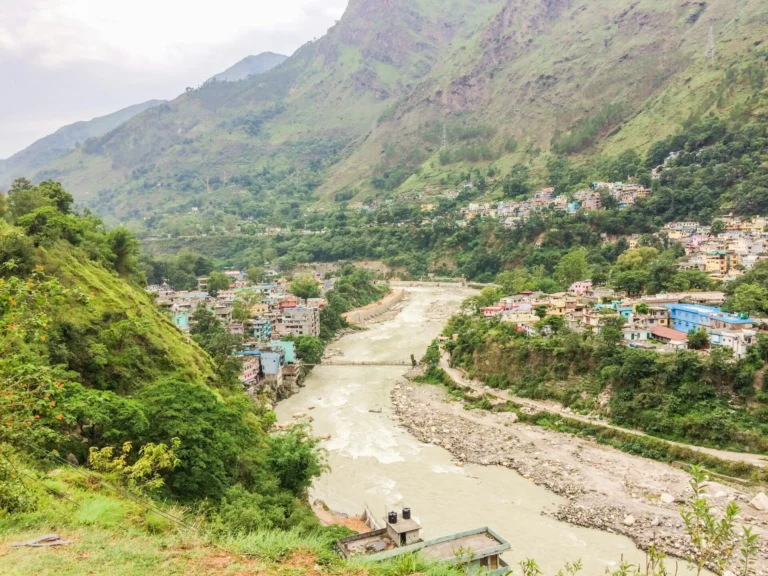

A few days ago, the Spark ran a story discussing the terrible mountain floods that occurred at the Nepal-China border last month, which killed over 1,400 individuals. Early expert reports state the floods were – at least partly – brought on by a warming planet.
On September 24th, a Nepal delegation spoke before the U.N. General Assembly calling for a major climate compensation, which will help the poor country respond to the dire effects of climate change.
The delegation asked “who should bear the costs and responsibility for such environmental disasters,” especially since “the Himalayan nation contributes only a tiny fraction of global greenhouse gas emissions, yet faces increasingly severe climate-related risks,” according to Deutsche Welle (DW).
Nepal has not yet received a response from the U.N.
In 2022, the U.N. created a Fund For Responding To Loss And Damage, to offset the consequences of global warming. But “this fund, established to aid developing nations, is currently underfunded and untested,” stated an Economic Times synopsis of a Bloomberg article published in early September.
Naturally, Nepal needs help now. But “the fund’s limited resources and scheduled meetings pose significant challenges for rapid assistance,” according to the Economic Times synopsis.
The basis of the Loss And Damage Fund appears to be a United Nations-based scientific review printed in 2019 and entitled, Special Report on the Ocean and Cryosphere in a Changing Climate. Therefore, the review serves as a basis for a current global response to this dire problem. It’s important to know of its basic findings.
Below, The American Spark quotes a major section of the U.N. study’s policymaker summary:
The Importance of the Ocean and Cryosphere for People
“All people on Earth depend directly or indirectly on the ocean and cryosphere. The global ocean covers 71% of the Earth surface and contains about 97% of the Earth’s water. The cryosphere refers to frozen components of the Earth system.
“Around 10% of Earth’s land area is covered by glaciers or ice sheets. The ocean and cryosphere support unique habitats, and are interconnected with other components of the climate system through global exchange of water, energy and carbon. The projected responses of the ocean and cryosphere to past and current human-induced greenhouse gas emissions and ongoing global warming include climate feedbacks, changes over decades to millennia that cannot be avoided, thresholds of abrupt change, and irreversibility.
“Human communities in close connection with coastal environments, small islands (including Small Island Developing States, SIDS), polar areas and high mountains are particularly exposed to ocean and cryosphere change, such as sea level rise, extreme sea level and shrinking cryosphere.
“Other communities further from the coast are also exposed to changes in the ocean, such as through extreme weather events. Today, around 4 million people live permanently in the Arctic region, of whom 10% are Indigenous.
“The low-lying coastal zone is currently home to around 680 million people (nearly 10% of the 2010 global population), projected to reach more than one billion by 2050. SIDS are home to 65 million people.
“Around 670 million people (nearly 10% of the 2010 global population), including Indigenous peoples, live in high mountain regions in all continents except Antarctica. In high mountain regions, population is projected to reach between 740 and 840 million by 2050 (about 8.4–8.7% of the projected global population).
“In addition to their role within the climate system, such as the uptake and redistribution of natural and anthropogenic carbon dioxide (CO2) and heat, as well as ecosystem support, services provided to people by the ocean and/or cryosphere include food and water supply, renewable energy, and benefits for health and well-being, cultural values, tourism, trade, and transport.
“The state of the ocean and cryosphere interacts with each aspect of sustainability reflected in the United Nations Sustainable Development Goals (SDGs).”